
Skip to main content Accessible Version
Crowns and Bridges
A healthy, beautiful smile starts here

Crowns and Bridges | Dentist
Improve your smile today – call to schedule a consultation!
Claim Now!

Crowns and Bridges

dental crowns | dental bridges | palos heightsCrowns and bridges are restorations that correct dental problems, while protecting and strengthening your teeth.

A dental crown is custom-made to fit over a damaged natural tooth. It restores the function of the tooth and provides strength and support. Dental bridges are also versatile and have a number of uses.

Crowns and bridges are usually made of porcelain because of its natural appearance and durability.

Everyone wants a smile that is healthy and beautiful, and we can help you reach that goal by using crowns and bridges. Updated techniques and treatments have made the placing of crowns and bridges easier than ever before.

When Are Dental Crowns and Bridges Used?

Dental crowns have many applications and can be used to correct a number of problems:

  • Severely decayed teeth
  • Teeth weakened by root canal treatment
  • Fractured or broken teeth
  • Broken fillings
  • Large, unattractive fillings

A dental bridge is used to fill the space left by a missing tooth. The bridge is usually made as a single unit that is held in place by crowns on adjacent teeth. A dental bridge not only improves your appearance, but also prevents surrounding teeth from shifting out of place and moving into the space left by a missing tooth.
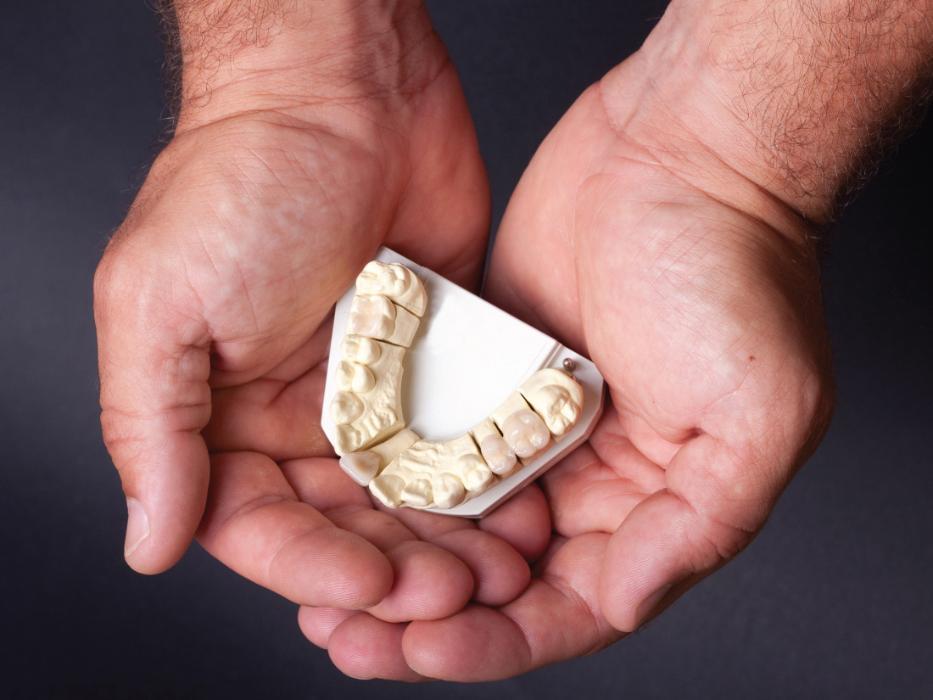
dental bridge | dental crown| palos heights ILWhat Does Placing a Crown or Bridge Involve?

A dental crown or bridge can usually be placed in two or three visits. First, we prepare your natural tooth to receive the restoration and then impressions are taken of your teeth. The impression accurately represents the position of your natural teeth so that your restoration fits perfectly.

The impressions are sent to a special dental lab, where they are used to create your permanent restoration, which usually takes about two weeks. Before you leave our office, we fit you with a temporary bridge or crown that you wear while the new crown or bridge is being prepared.

Once the restoration is finished, we will schedule an appointment for you to return to our office. At that time we check the finished restoration for proper fit, making adjustments as necessary. Finally, the restoration is cemented permanently into place.

Before you leave our office, we will give you instructions on caring for your new restoration. The restoration is fully functional, but you should remember that it requires special care to prevent damage and the need for replacement. If you practice proper oral hygiene and schedule regular dental cleanings, your new restoration will last for many years.

Call to Schedule an Evaluation

Are you troubled by a damaged or missing tooth? Please call our office today to schedule an evaluation and learn more about your options!

Frequently Asked Questions

A dental crown, also referred to as a cap, is a restorative option to restore a single tooth into function and also provide esthetics in the esthetic zone. There are many reasons to place a crown, but the basic process involves a dentist, or laboratory modifying and contouring a tooth, or implant component, so that a fake tooth (crown) can fit over it and glued into place.  I always compare it to placing a thimble over a finger.  Crowns can be made of esthetic materials to match adjacent teeth, or gold.  There are benefits to each material option and we will discuss this with our patients as we  are planning the restoration.  If you think you need a crown, we would be happy to discuss it with you further, so give us a call for a consultation. 

Having a missing tooth can be very stressful when considering esthetics, the treatment one needs to undergo to replace the tooth, or teeth, and the costs associated.  Since every patient has their own individual needs as well as financial constraints, it is not always up to us to decide what is “best” for you. We will always present all of the available options and weigh the pros and cons as far as optimal dental treatment goes.  Along with that, we will present the fees associated with all of these options.  Finally, we will present you with options for third party finance companies to help spread the costs over a longer period of time where costs are a concern.  We will try to find a way to allow you to get the best treatment, the treatment that you deserve, but also understand if the “best” treatment just isn’t feasible at this time.  We will then work to help you decide on one of the alternate options

There are various reasons we do crowns as well as various processes involved.  Most of the time, after a tooth is prepared and an impression taken, we can have the crown ready to cement in two weeks.  Crowns on implants will often require an additional week to make as implant components must be ordered by the lab and custom parts fabricated.  Those additional steps require more time at the lab. 


There are other times that the time frame may differ for various reasons.  Sometimes we like to keep a temporary crown on, or even the permanent crown, using temporary cement for an extended period. We will do this when we have concerns about the health of the nerve in the tooth and we want additional time to evaluate it.  If we need the lab to make a post for the tooth, this will also require additional time and appointments. Other times, we will send you to the lab so the lab technician can see you for custom shading and tinting so the best esthetic result can be obtained.  Timing of that appointment and availability of the patient and lab technician may delay the final finish date accordingly.


Like so many things, we want them done right, not just fast.  We understand that patients want things done right away, but we want them done right. We will always go the extra mile to make sure you get the result you want and deserve. 

Crowns, often called caps, and bridges are ways to restore teeth into function.  Crowns are restorations placed on a single tooth or implant to return it into function.  A bridge, on the other hand is used to replace a missing tooth or teeth by “bridging” the space that is missing teeth using artificially fabricated teeth. We do this by fabricating a restoration that has several teeth connected together and we anchor this restoration, also known as a “bridge,” to existing teeth that are modified to act as anchors.   The most common materials used for these restorations are either gold, porcelain, lithium disilicate, or zirconia.  There are other materials available, but these are the ones we most commonly use. There are benefits and drawbacks of each material option and we always weigh esthetics and strength as deciding factors when selecting materials for our patients. If you feel you need a crown or bridge, contact us so we can give you an evaluation and see what your options may be.   

When people have chipped or worn teeth, it can result in esthetic concerns as well as produce discomfort of the teeth or joints. While patients want things fixed quickly, our first challenge is to determine the cause of the problem.  We always want to know the cause because we want to prevent further breakdown of the teeth, as well as have long term success with any new restorations we may place.  Sometimes the fix can be as simple as a filling, a crown or a veneer,  while other times the optimal treatment may get more involved. We often see an underlying cause of tooth breakdown related to grinding or clenching teeth. When there is significant wear throughout, the restorative treatment to address this problem may involve a full rehabilitation of crowns on many, or even all teeth to re establish a normal alignment of the teeth.  Other times we see an underlying cause that is orthodontic in nature and we need to treat the patient with orthodontics such as braces or Invisalign prior to any restorations.  So, our “cosmetic” options will be determined by the problems we are presented with, and we will always show our patients X-rays, photos, and plaster models to explain our findings and recommendations prior to starting any treatment. If you have any concerns with chipping or wear, give us a call so we can see what options you may have to restore your optimal smile. 

Meet Our Doctor:

Robert C. Clay Jr. DDS

Dr. Bob grew up on the far southeast side of Chicago. After graduating from St. Francis de Sales High School, he attended Purdue University in West Lafayette, Indiana where he graduated with a Bachelor of Science degree, specializing in microbiology. Dr. Bob went on to attend the University of Illinois at Chicago Dental School where he received a second Bachelor’s Degree, a Bachelor of Science in Dentistry, followed by his Doctor of Dental Surgery degree. Following graduation, he completed his state and national board exams and began practicing dentistry in ...

Featured Blog Posts - Crowns and Bridges

August 1, 2019

Does my broken tooth have to be pulled?

There is so many advertisements on the tv and radio that are talking about implants.  Implants are a great tool to replace a broken tooth,Tooth Broken At Gumline or teeth, that can not be restored.  With so much emphasis on implants lately, patients often forget that our main goal is to try to save your teeth, not just pull them for implants.  When you break a tooth, you come in and we will give it a thorough evaluation.  Assuming there is enough healthy tooth to work with, and there is no major periodontal (gum) problems to compromise things, we are likely to present you with options to save your broken tooth.  ...

Getting an appointment is fast and easy!
Get Started!